
 Tweet
Tweet
Por acaso acho que as OZ Crono Evo que tenho no Corolla vão encaixar que nem uma luva no GT-86 :p
-
-
As de 18 do concept mkII estão disponiveis... :assobioOriginally posted by Martins_Viseu View PostComentar
-
Quando referi as minhas jantes foi mais pelo desing que pelo tamanho,acho que 17 é o ideal no que toca a custo/divertimento ;)Originally posted by Martins_Viseu View PostComentar
-
-
Uhm... nao reconheco pk ? :lol...
olha metam-lhe as jantes do LFA de lado so para experimentar... :fixe...
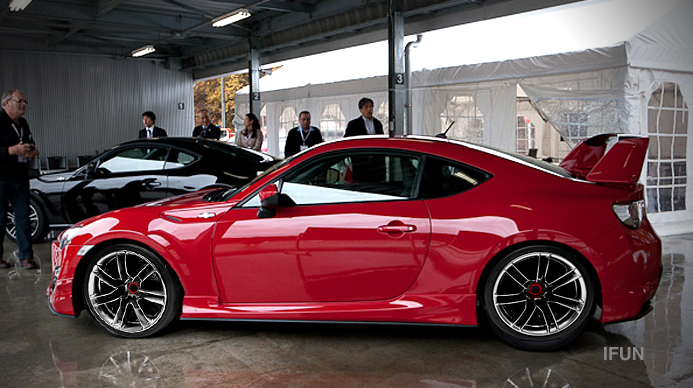
Assim com essas jantes , o aileron ja está a mais...Comentar
-
-
Ja fica um pco mais compostozito.. Mas esse na foto nao tem o aileron , e nem os farois de nevoeiro... :lol
photoshop .... :fixe..Comentar
-
Para quem quer essas jantes deve ficar contente por saber que a Five Axis (criadora desse prototipo), esta a trabalhar nu Kit :fixe
*** Five Axis Edition Scion FR-S Package In Development***by***Scion FR-S Forum / Subaru BRZ Forum / Toyota 86 Forum and Blog — FT86club.com
Off-topic: Este carro é brutal, nunca mais chega o test-drive.... :p Esta um carro que é qualquer coisa de especial...dependendo do preço (não seja muito diferente do que custou o Auris HSD ca de casa, pode ser que seja o meu, mesmo meu, primeiro carro... :fixe
Nem que fique nas lonas... :lol Mas se puder...não perco a oportunidade...só espero que o preço não seja muito alto....e que o imposto automovel desça em 2013 (altura em que penso fazer compra) para que ainda me ajude mais a consegui-lo...é que eu simplesmente "babo-me" por este carro... Preto, com interiores preto com os apliques em vermelho, um escape mais agressivo (estilo da Greddy), e umas jantes 17" com pneu de baixo perfil e estava no ponto... :fixe Muito provavelmente não seriam jantes da Toyota, que tirando as 18" do 2º concept não acho muita piada a elas e talvez sejam um pouco grandes para depois se trocar de pneus (€), não mexia muito mais no aspecto :fixe
Possivelmente não o rebaixava que depois qulquer coisa e raspava :lolComentar
-
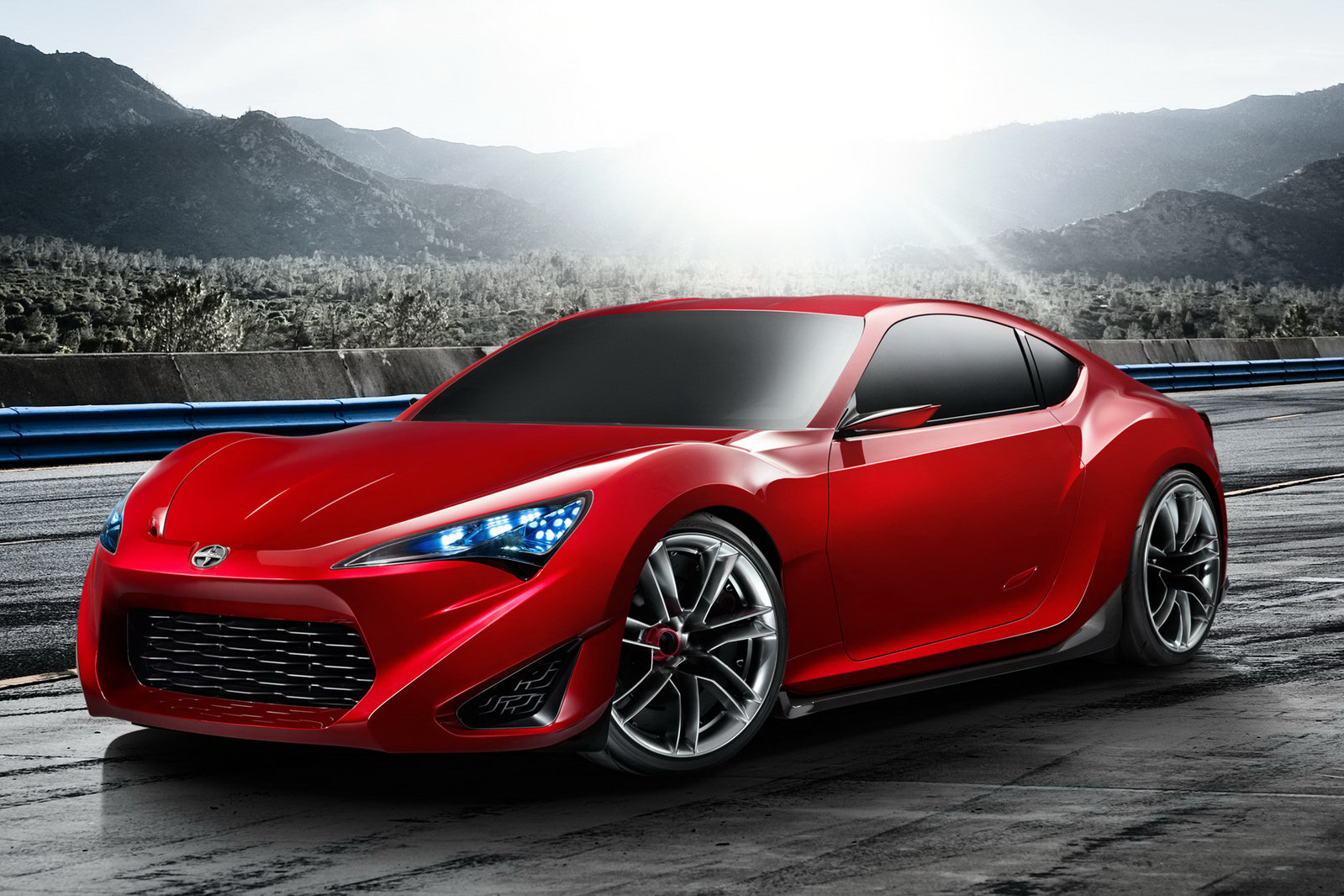
essa imagem saiu para a net quando a scion lançou o protótipo.Originally posted by nuno_n View PostComentar
-
Originally posted by martins View Post
Sim realmente, não tinha pensado nisso, é bem verdade.
Mas a Subaru é que teve o trabalho todo em termos de motor e chassis/dinamica.
Ora sendo assim prefiro o Subaru até porque não sei porquê mas acho o Subaru mais engraçadito...até a cor azul lhe cai melhor, pudera o azul subaru só fica bem a um SUBARU!!!Comentar
-
vais ter que espanha comprar um glock.. pelos vistos o subaru nao se vai vender por ca!! a ver vamosComentar
-
Vai rever os reviews, entrevistas a ambos os eng. chefes do projecto e chegas à conclusão que não é como dizes.Originally posted by glock View Post
Para além de que os carros estão com afinações dinâmicas diferentes. Subaru mais estável, Toyota/Scion mais ágil.Comentar
-
Sim claro que acaba por ser um projecto conjunto, todos os engenheiros mandam os seu bitaites e tal, mas sim já li em algum lado que a Subaru teve mais envolvimento que a Toyota no desenvolvimento do projecto, se foi uma review suspeita ou não ai também já não sei, mas...
De qualquer forma gosto muito dos dois e é de louvar este projecto, mas o que li(a ser verdade) deixou-me um pouquito desiludido pela Toyota.Comentar
-
Pelo que eu sei, a Subaru cedeu o chassis, e o bloco do motor, a toyota trabalhou o bloco e adicionou o sistema D4-S e a maior parte do design também foi a cargo da Toyota...
A review não será das primeiras a sair, da CarAndDriver senão estou em erro? Ainda com os autocolantes no prototipo?
La dizia que a Subaru tinha feito tudo, mas era e foi praticamete só a Toyota a andar com ele na Nurburing, correr com o carro....o que não me parece coisa de quem não quis saber da parte de "engenharia"...
Pessoalmente achei esse artigo muito tendencioso...é que numa parte diziam que era um Lotus a curvar, noutro que subvirava...em que ficamos?
O pessoal também está a embirrar com os simbolos Subaru no carro...isso é porque a Subaru é quem vai construir os dois...
Quando saiu esse artigo, foi numa altura em que só se falava no Toyota, e para mim foi mais para ver se chamavam a atenção...
Sinceramente acho que a Toyota é que teve a maior parte do trabalho....porque apresentou a ideia, mecheu no moto, etc....Comentar
-
Diminuir a importância das decisões dos eng. chefes a simples bitaites... não vão por aí, bitates diz o Zé da Esquina.
Preferirem um carro em relação a outro. Ok, certo.
Justificarem isso pelo pouco envolvimento da Toyota no projecto... não é verídico de todo.
Toyota 86 philosophy - Interview with Tetsuya Tada | Tune86 - Toyota 86 news (GT 86, Subaru BRZ, Scion FR-S)Toyota 86 philosophy - Interview with Tetsuya Tada
This time we will not go with specs listing or shiny pictures. This is for your reading pleasure.. A few journalists had a chance to talk with the chief engineer - Sport Vehicle Mangement Division from Toyota Motor Corporation - Tetsuya Tada! He is the guy that is responsible for the development of Toyota 86, that probably will become the dream car for many of us. The interview during Toyota Gazoo Racing Festival was as good as his presentation of 86. We give you some excerpts from the interview, maybe to calm down the drivers that thrive for power, turbo, awd or electronics, that Tada considers boring.
“Mr. Toyoda (Akio Toyada, president of Toyota) almost continuously participated in the development of this car. Not as President, but as a test driver. Usually, when they say that the president of a company is test driving a prototype car, then it is mostly ceremonial. Mr. Toyoda’s participation was not simply ceremonial. He was a serious test driver and had some pretty tough comments. In some phases of the development. he said: “If that is the best you can do, why not quit now.” One by one, we overcame these problems.”
“When Naruse-san (Hiromu Naruse, Toyota’s chief test driver) was still alive, he participated in the tests many times and gave us some quite harsh comments, like: ‘This is a miserable car. You are doing very poorly.’
We tested this car at the Nürburgring. Naruse-san died very close to the Nürburgring, and each time we testdrove the car later, we made sure to pass by the memorial of Naruse-san. We tried to keep Naruse-san’s spirit alive.”
“We visited with car enthusiasts in Japan, America and Europe. The feedback we received was almost always the same. They said there are a lot of sports cars with high horsepower that are very fast, but these are not the sports cars that they want to have. They want small compact cars that are controllable, that they can tune themselves. However, that kind of sports car is not on the market. Therefore, these sports car enthusiasts are forced to continue to use older cars from a long time ago, because there is no new alterative on the market.”
“We also went to competitors and asked them: “Why do you focus on fast cars?” The response almost always was: ‘Actually, we really don’t want to develop these kinds of cars. But once we bring a plan to develop that car to our board, the first question the directors of the company would ask is: How much faster is that car compared to what the competition has? How many seconds faster around the Nürburgring? What about the acceleration? These questions always come up because numerical performance is the easiest to understand.
Now how did we get the permission from our board? The only reason was that among the directors, there was a person called Akio Toyoda, who is a car enthusiast himself.”
“There is a Toyota standard for designing new cars. This standard was to a large extent ignored. Why did we do this? There are cars that are accepted by a lot of people. Practical cars that are easy to drive and that do not break easily. These are standard Toyota cars. The 86 is not a car like that. We had to change our design approach for this car. We may have to do this again for other cars.
It is impossible to develop a sports car that appeals to everybody. If you try to please everybody, the car would be half-baked for everybody, and not particularly good for anybody. This car is not developed by a committee, or by consensus.”
“When we first presented this idea to our advertising people, they were drastically opposed to this idea. They complained that the car doesn’t have a particularly fast time on the circuit, it does not use any new technology. They also could not think of a catchy headline for the catalogue.”
“To make the car customizable, we did away with computers to the highest extent possible. A lot of the cars on the market today are controlled by computers. People have the feeling that they are driven by the car instead of them driving the car. That makes for a boring experience. That is why we decided to go back to the basics of car making. With the low center of gravity, the driver now is in personal touch with the road again.”
“30 to 40 years ago, there was an AE86, and the price of this car was 1.5 million yen. At the time, that was the starting salary was for a university graduate. We kept that in mind when we priced the car. In the meantime, there has been a rise in prices, and the starting salaries rose also.”
The Truth About The FT-86. Straight From The Mouth Of The Chief Engineer | The Truth About CarsThe Truth About The FT-86. Straight From The Mouth Of The Chief Engineer
“When we started working on the FT-86 we had no idea where we would end up,” said Tetsuya Tada, whom I met last Sunday to talk about his work.
“Was it going to be a ridiculously expensive car? Or one anyone can buy? All we knew it was going to be a sports car. The rest was a blank sheet.”
The FT-86 that eventually took shape on this blank sheet will be in showrooms down the street from you, all over the world, next year.
The FT-86 ”may just be the car to herald Toyota’s ‘second renaissance,” if some enthusiast blogs are right.
At the very least, this car will change how we think and dream of a sports car: We won’t. This is not a dream car. For most of us, it will be an impulse buy.
Tetsuya Tada tells its story.
Tetsuya Tada is the Chief Engineer of the FT-86, Toyota’s new sports car that had powered the rumor mills for many years. Some enthusiast blogs enthusiastically painted Tada as the “Jason Bourne of Toyota Sports car development.” If that is the case, then he is the friendliest and most unassuming Jason Bourne I ever heard of. He is the man I’d expect to see carrying two bags when I take out my carefully sorted garbage after midnight in a quiet Japanese neighborhood. As a Toyota Chief Engineer however, Tada carries more responsibility and more power than the Ludlum hero. Scott Bellware once described the role of a Chief Engineer at Toyota like this:
“He is the person responsible for the design, development, and sale of the product. He is the organizational pinnacle and the hub through which authority and ability flow. The CE isn’t just an architect or technical lead or just a customer proxy or just a project manager or just process master. He’s all of these things and more. He doesn’t just pass along customer requirements for the product, he defines them. He doesn’t just implement the business’s design for the product, he creates it. He’s large and in-charge, and he’s uniquely and deeply qualified to be so.
Because all of these abilities and authorities are invested in one extremely capable, senior, trusted product development person, the coordination of the various perspectives, values, and vision of a product and its execution don’t suffer design-by-committee issues. And because the CE has these many responsibilities and abilities, he’s a rare person.”
Tada indeed is a rare person. Dressed in khaki pants and a striped shirt, the affable attitude accentuated by rimless glasses, he hides all that power well.
We met last Sunday at Toyota’s Megaweb down by the waterfront. Megaweb is part theme park, part test drive venue. We met there, because an FT-86 prototype is on display. We didn’t go there to drive it. First off, Megaweb is not a test track. It was barely appropriate to give the iQ a slow spin. Second, most of the FT-86 is still a secret. Doors and hatches of the car on display are locked tight. So were the lips of its Chief Engineer.
“You can ask anything except specs and price,” Tada-san announced after we found a quiet space away from the din of the Megaweb.
“In that case, let’s have lunch,” was my answer.
In lieu of talking about cars, we found out that Tada lived where I lived during his time in Germany: In Düsseldorf Oberkassel, me because of its watering holes, him because of the Japanese school. Japan’s Jason Bourne is a dad who rather did a 100km round trip commute to Toyota Cologne each day than put his children’s education at risk. Speaking of lunch, we established that we both had regular lunch at the Kikaku, Düsseldorf’s best sushi place. That created a bit of bonding, and Tada started talking about the car.
hen Tada stared at a white page, it was 2007. He didn’t know what to think:
“We did know from the very beginning that it was going to be a sports car. I said, well, if it’s going to be a sports car, it has to go fast. We were looking at the Nissan GT-R, the Mitsubishi Evolution, those cars were in our heads at the original stage.
Then we thought: Should we make a car that is faster than the GT-R?
You know what we did then? We did a lot of research. We talked to owners, fanatics, real buyers of sports cars around the world. They told us: Speed isn’t everything. If it’s just an incredibly fast car, they don’t really want it. What they want is a sports car that is small, compact, light, and that handles just the way they want it to handle.”
The customers wanted more: They wanted a sports car for less. A Veyron makes for good copy and dreams. But it also causes can’t-have-it frustrations. Tada listened intently to his future customers:
“The super-super-super fast cars are only for the super-rich. Even most super-rich don’t want to buy them. The people I talked to were looking for something like the 80s kind of a sports car, echoes of an AE86. They wanted a stripped-down, basic sports car with the price more like that of a piece of sports equipment, not the price of a house. Those people wanted something that doesn’t exist.”
Tada and his team set out to design the impossible. A year later, they had the design, the specs, and the price point. Tada presented it to the board of Toyota. The concept was approved. The project had an important advocate on the board: Akio Toyoda. At the time, the CEO was Katsuaki Watanabe. The time was 2008, and all over the world, the skies were falling.
Tada puts it in his trademark humble words when he describes the boardroom discussions:
“Sometimes, it is a little hard to explain why this kind of a vehicle is needed for the Toyota brand. If you just take the commercial point of view – it won’t make a lot of money, and of course, there are some people who object to that. But as they say, money isn’t everything – especially when it comes to branding.”
At the height of carmageddon, Tada received the go-ahead for what we would call an “enthusiast car.” The Japanese have a more befitting description. It’s a “nekkyousha car” a car for maniacs – in a good way. It helped that Toyota’s resident auto otaku, Akio Toyoda, was behind the concept, and it helped even more that he became President of Toyota a year later.
Asked what changed for the FT-86 when Toyoda took the helm of Toyota, Tada says: ”He became one of our test drivers.”
Asked what it means when you work in the shadow, but also in full view of the President of the world’s largest carmaker, Tada changes the subject. His true boss is the customer, and the customer didn’t want another rice racer:
“It is possible to soup-up sedans or hatchbacks to make them sporty. But what these people are after is a body that is already very low to the ground, very sleek, a body that they can then work on – if they want.”
As for low to the ground, Tada promises a “production car with the world’s lowest center of gravity.” The FT-86 will be a tinkerer’s car. The car is named “FT-86” for a reason. Toyota wants to make a mental connection to the AE86, the archetypical cult-craze car from the Star Wars era. Nearly 20 years later, the hachiroku (Japanese for 86) still commands a following for which some modern day Messiahs would kill. Toyota wants to build a new millennium hachiroku so bad, they even kept the number. Says Tada:
“The 86 was such a popular maniac car not because of what the maker did, but what the users did with it. It created its own aftermarket and a tuner industry. The idea of the FT-86 is basically the same. We want to create a car that is easy for people to tune and to play with.”
Tada indeed is a rare person. The Teutonic engineers I grew up with used go into convulsions or threw screaming fits when people modified “their cars” – except maybe using factory-approved and overpriced accessories.
Tada smiles when you ask him whether is hurts his pride as an engineer when the people of SEMA gang-rape “his car.”
“Yes.”
A short, but honest answer. Isn’t it painful to spend years designing the perfect car, and to make it so perfect in a sense that some guys in a garage can modify it beyond recognition without even breaking a sweat or lighting a welder?
“Yes.”
The Chief Engineer’s sensitivities are touched by the most benign act of modding – the choice of tires:
“We usually come up with a designated tire, a tire that is optimal for the car. We arrive at this decision after long tests. That some guys go and decide their own tire steals a little something from the enjoyment of the engineer – but that’s the concept of this vehicle. It is not made for the enjoyment of the engineer – it is made for the enjoyment of the owner.”
That owner may not need a lot of money, but he will need to know how to drive. He will need to use his own brain and the seat of his own pants. Tada had jotted down the principle in his self-derived design guide, and he sticks with it:
“From the beginning, the concept was to put the driver back in the driver’s seat, and to eliminate computers as much as possible today. Powerful sports cars use a lot of computer technology so that anyone can drive and handle them. We decided not to go down that road.”
The FT-86 has about half of the computing power that is dragged around in a modern day car. The preferred shifter is a stick. An automatic is optional. The slushbox is nothing fancy. “No DSG or anything of that kind,” says Tada, and is proud. Sure, the automatic has a computer, but the shift points cannot be changed – at least not at the flip of a switch in the dashboard. Computers want to keep you on the straight and narrow, but some FT-86 owners want that car to go sideways. If you need nannies, go down to the children’s hospital.
The FT-86 will be built at Fuji Heavy’s Subaru, and when I mention that, the engineer’s pride shifts into low gear – for extra revs. Tada quickly explains that this is just contract production, and it’s the same as “when we make cars at Central Motors or Kanto Auto Works.” Both are separate companies, but they are also part of the greater Toyota empire. Toyota owns a good chunk of Fuji Heavy, so Subaru is part of the family – in a way.
Subaru will produce its own version, probably called the BRZ. Both companies also developed the car together, and that must have been an interesting exercise. Recalls Tada:
“The first year was actually quite tough. The character and processes of the two companies are quite different. In the beginning, we sat down and decided who does what. That didn’t work out very well, because of the cultural differences between the companies. When people started to become more interested in the car itself, people from both sides ended up becoming one team. In the end, it wasn’t so much Toyota doing this and Subaru doing that, but people working together with one goal.”
In the maniac, well, enthusiast scene, it is pretty much gospel that the cars use Subaru’s flat four “D4-S” boxer engine. Depending on whom you believe, the production engine ranges from a tried & true to a refined & modified D4-S. That elicits protests from Tada, as loud as the softspoken man can manage:
“No,no, no – it is a completely new engine. The engine is still a boxer. The technology, even the engine block are completely new. Everything is new. The only thing that remained are the mounting points.”
Imagine how much engineer’s pride that one did cost. A completely new engine was developed. At the same time it comes with an invitation to be swapped for whatever follows the Subaru bolt pattern.
After years of concept cars, the production version of the FT-86 will debut at the Tokyo Motor Show, December 2 – December 11, 2011. “Next year” (most likely in spring), the car will be launched. It won’t be available in Japan first and years later elsewhere. It will, says Tada, be available next year “all over the world.” In the U.S., it will definitely by a Scion. In the rest of the world, it will be a Toyota.
Jack Baruth and Sajeev Mehta equipped me with a long list of questions. After Tada’s initial admonition that we can talk about everything except specs and price, I didn’t have much hope for answers, but nonetheless, I tried. The following Q&A ensued:
“Can you tell me the weight?” “No.”
“Can you tell me the horsepower?” “No.”
“Can you tell me the weight distribution?” “No.”
“Can you tell me the price” “No. It will be affordable.”
“Suspension?” “McPherson, double wishbone.” And a smile.
And so it went while Tada was conspicuously consulting his watch, signaling that time, patience, or both are running out. All I could do was to use the old investigative reporter trick, put two versions on the table, and ask which one is close. I used the crowd-sourced specs from the fountain of knowledge.

Tada eye-balls both. And gives his verdict. See above.
Last question time!
“Mr. Tada – is it true that you compared the color of the FT-86 to the ass of a monkey?”
Ooops. The Chief Engineer covers his mouth in feigned shock and explains that he indeed had experienced “some trouble” after magazines had written that he indeed had compared the car’s color to a monkey’s derriere. He quickly adds that he had referred not to just any monkey, but to a genuine Japanese monkey, those amicable animals that visit hot springs in wintertime, with icicles dangling from their furs – parts of Japan’s storied heritage.
And that’s not all, says Tada. The FT-86 red can also be compared to the world famous Japanese sunset (no sunrise is mentioned) and to the dragonfly. In Japan, the dragonfly is a symbol of courage, strength, and happiness – it even symbolizes the whole Japanese archipelago.
So there you have it. The FT-86 is so customizable, so tunable, so hot-roddable that it gives you a choice of associations triggered by its color. Depending on your mood, you can pick sunset, dragonfly, or an entirely appropriate greased monkey. As long as they are Japanese.Comentar



Comentar